Names with virtuous meanings
Many Hindu names carry meanings related to light, wisdom, strength, beauty, peace, or devotion. Parents often choose a name that reflects a quality they hope the child will carry through life.
NAMING GUIDE
Hindu baby naming is a tradition rich with meaning, family, and in many homes, a deep connection to Sanskrit roots and spiritual life.
This guide explains how many Hindu families approach baby naming, from Sanskrit meanings and deity names to astrology, the Namkaran ceremony, and modern preferences.
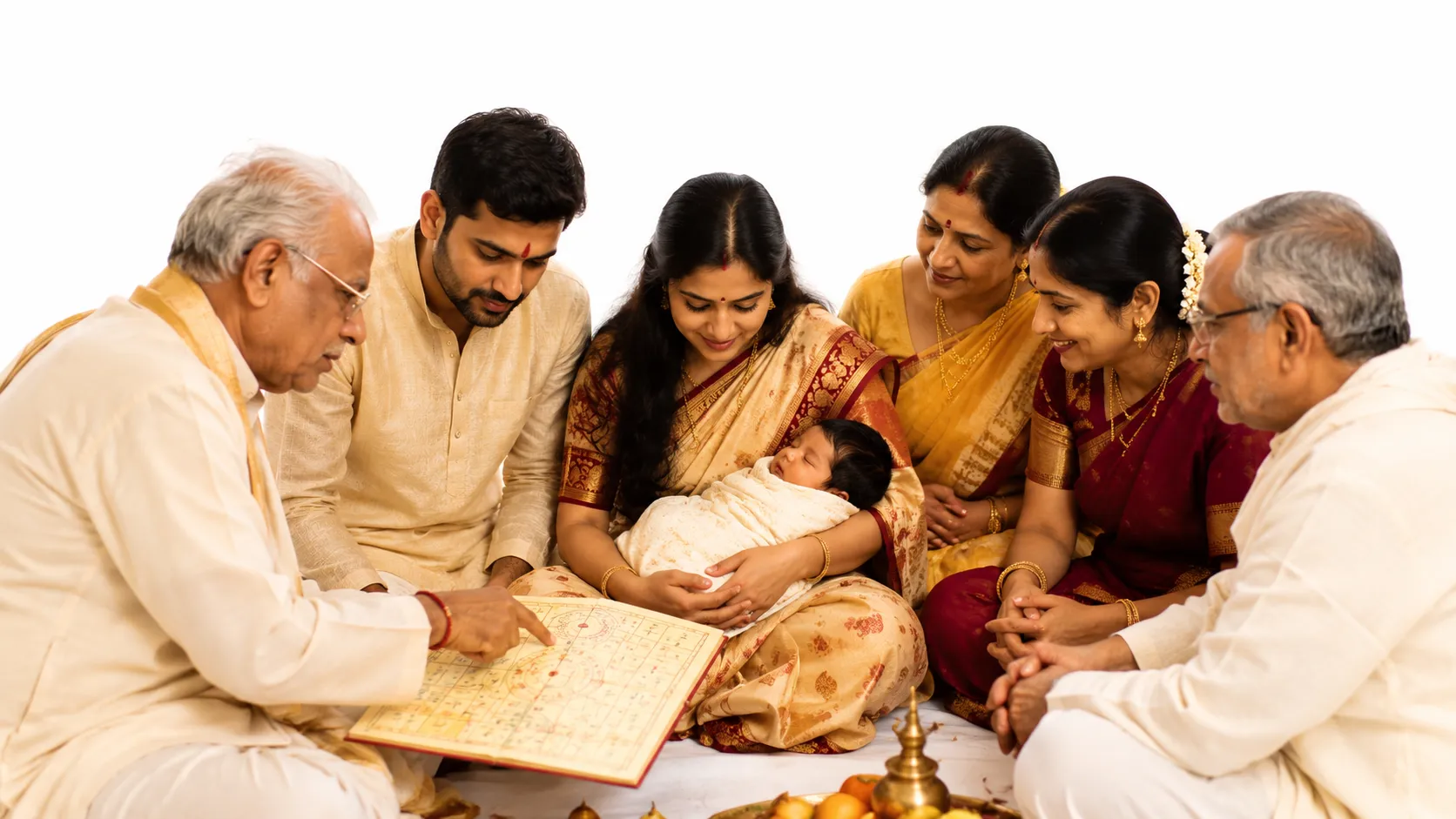
Quick Answer
Many Hindu families choose baby names based on meaning, Sanskrit roots, connection to deities, and family tradition. In some families, astrology plays a role in determining the first letter of the name. The Namkaran ceremony formally marks the giving of the name.
Naming a baby in many Hindu families is not just a practical decision. It is a meaningful event connected to family, spirituality, and often to the stars.
Many families approach naming by first looking at what qualities they want the name to carry. Sanskrit-rooted names with meanings tied to virtues, nature, or the divine are popular across many Hindu communities, regardless of regional background.
In many families, grandparents and elders play a significant role. The choice is often a collaborative one rather than a decision made solely by the parents. Advice from an astrologer or pandit is sought in some families, particularly for determining the starting letter of the name based on the baby's birth chart.
Practices vary significantly between families and regions. What is common in one household or community may not be practiced in another, and both approaches carry equal validity.
Sanskrit is the classical language of Hindu scripture, and many Hindu names draw from it directly.
Many Hindu names carry meanings related to light, wisdom, strength, beauty, peace, or devotion. Parents often choose a name that reflects a quality they hope the child will carry through life.
While Sanskrit is a common root, many families use names that come from regional languages such as Tamil, Telugu, Kannada, Bengali, Marathi, or Hindi. These names often have their own beautiful meanings rooted in local poetic traditions.
Some Sanskrit names carry more than one meaning depending on context. Many parents look into the deeper meaning of a name rather than just its surface translation.
Many contemporary Hindu families blend tradition with modern taste. Some parents choose names that are Sanskrit in origin but easy to pronounce in English or other languages, recognizing that the child may grow up in a multilingual environment.
Names of Hindu deities are widely used across communities. Names connected to Vishnu, Shiva, Lakshmi, Saraswati, Durga, Rama, Krishna, and many others are given with devotion and love.
In some families, a child is named after the family's Kuldevi or Kuldevta, the presiding deity of the family lineage. This connects the child's name to an ancestral spiritual tradition.
Honoring grandparents is also a common practice. Many families name a child after a deceased grandparent or incorporate a version of their name as a tribute. The name carries both a personal memory and a cultural continuity.
In many Hindu families, especially those who follow astrological traditions, the baby's birth chart is consulted before choosing a name.
A pandit or astrologer may determine the rashi, the moon sign, and the nakshatra, the birth star, based on the exact time and place of birth. From this, a specific letter or syllable is suggested as the auspicious starting point for the baby's name.
This practice is not universal. Some families follow it strictly. Others treat it as one input among many rather than a firm rule. And many families do not use astrology in naming at all, preferring to choose based purely on meaning and family preference.
This is a deeply personal area and families make their own choices based on their beliefs and traditions.
Hindu naming practices have evolved over generations, and many modern families blend traditional values with contemporary sensibilities.
Some parents choose names that are clearly rooted in Hindu tradition but are short, easy to spell, and internationally accessible. Others are drawn to rare Sanskrit names that have been largely forgotten and feel both ancient and fresh.
There is also growing interest among some families in names from other Indian traditions or names that carry spiritual meaning without being tied to a specific deity or regional language.
The diversity within Hindu naming is wide. The common thread across most families is the desire for a name that carries good meaning and feels connected to something larger than just current fashion.
Namkaran is the Hindu naming ceremony. It typically takes place on the tenth, eleventh, or twelfth day after birth, though the timing varies by region and family tradition. The baby is formally given their name during the ceremony, often with prayers and the involvement of family elders.
Keep reading practical naming advice for nearby decisions.

NAMING GUIDE
This guide explains how many Muslim families approach baby naming, including the importance of good meanings, names from the Quran, prophet names, Arabic and cultural names, and what parents commonly consider or avoid.
NAMING GUIDE
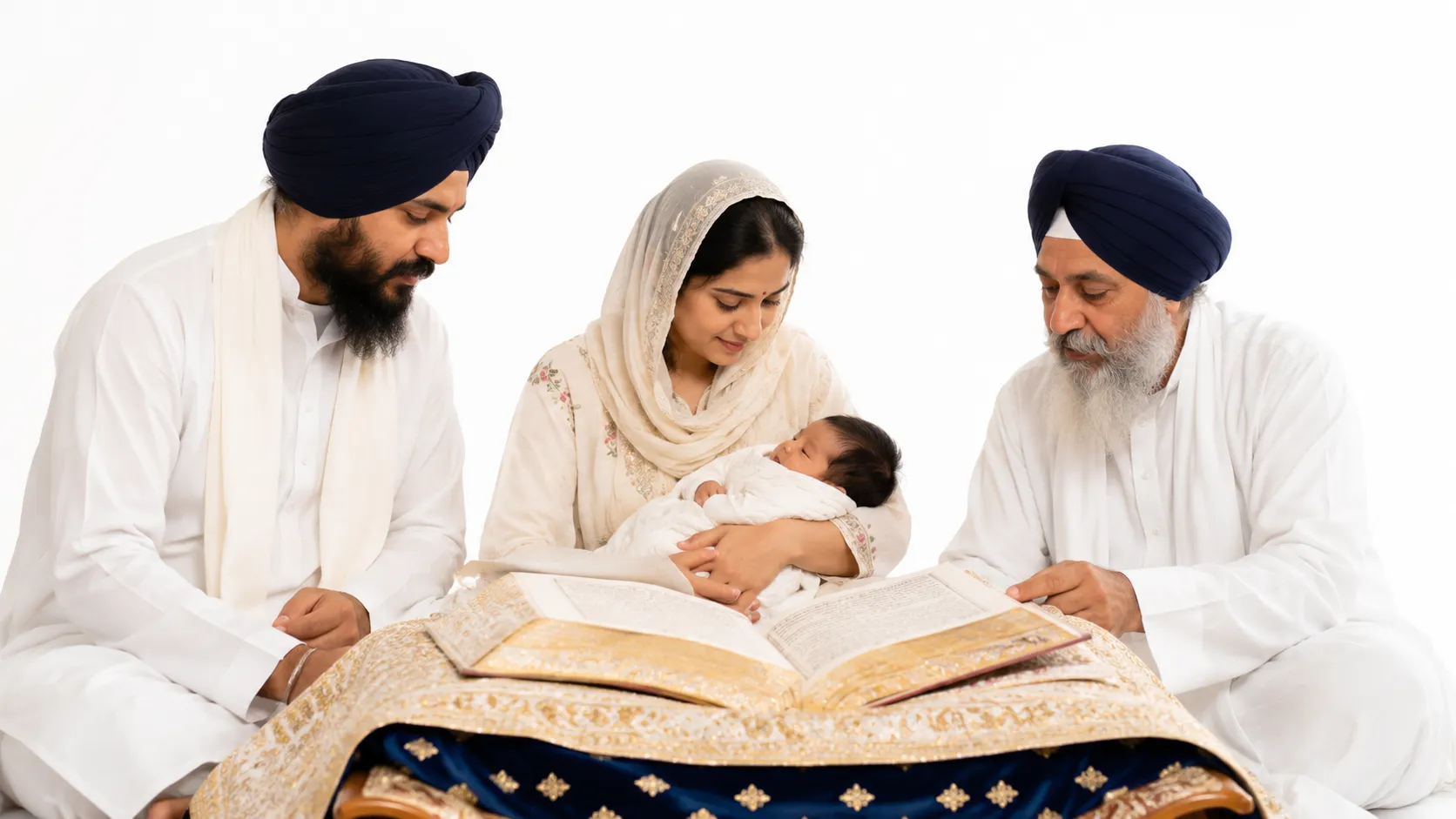
This guide explains how many Sikh families choose baby names, including the Naam Karan ceremony, the tradition of the first letter, spiritual meaning, and the use of Singh and Kaur.

NAMING GUIDE
From meaning and sound to family tradition and gut feeling, this guide walks through how parents choose baby names and what really helps when you are stuck.

NAMING GUIDE
From Google searches and baby name websites to TikTok, religious texts, and family, this guide covers where parents actually look when searching for baby names and how to build a shortlist that feels right.
Explore names by the meanings connected to this guide.

Names that mean Light
Names connected with guidance, illumination, clarity and brightness.

Names that mean Wisdom
Names connected with knowledge, understanding, insight and intelligence.

Names that mean Beauty
Names that mean Beauty

Names that mean Strength
Names connected with power, firmness, resilience and inner steadiness.

Names that mean Joy
Names that carry happiness, delight, gladness and a bright emotional tone.