The Hukamnama
The random opening of the Guru Granth Sahib produces what is called a Hukamnama, a divine command or lesson for that moment. The first letter of the Shabad on that page is the starting point for the name.
NAMING GUIDE
In Sikh tradition, the baby's name is not chosen by parents alone. The Guru Granth Sahib plays a central role in guiding the choice.
This guide explains how many Sikh families choose baby names, including the Naam Karan ceremony, the tradition of the first letter, spiritual meaning, and the use of Singh and Kaur.
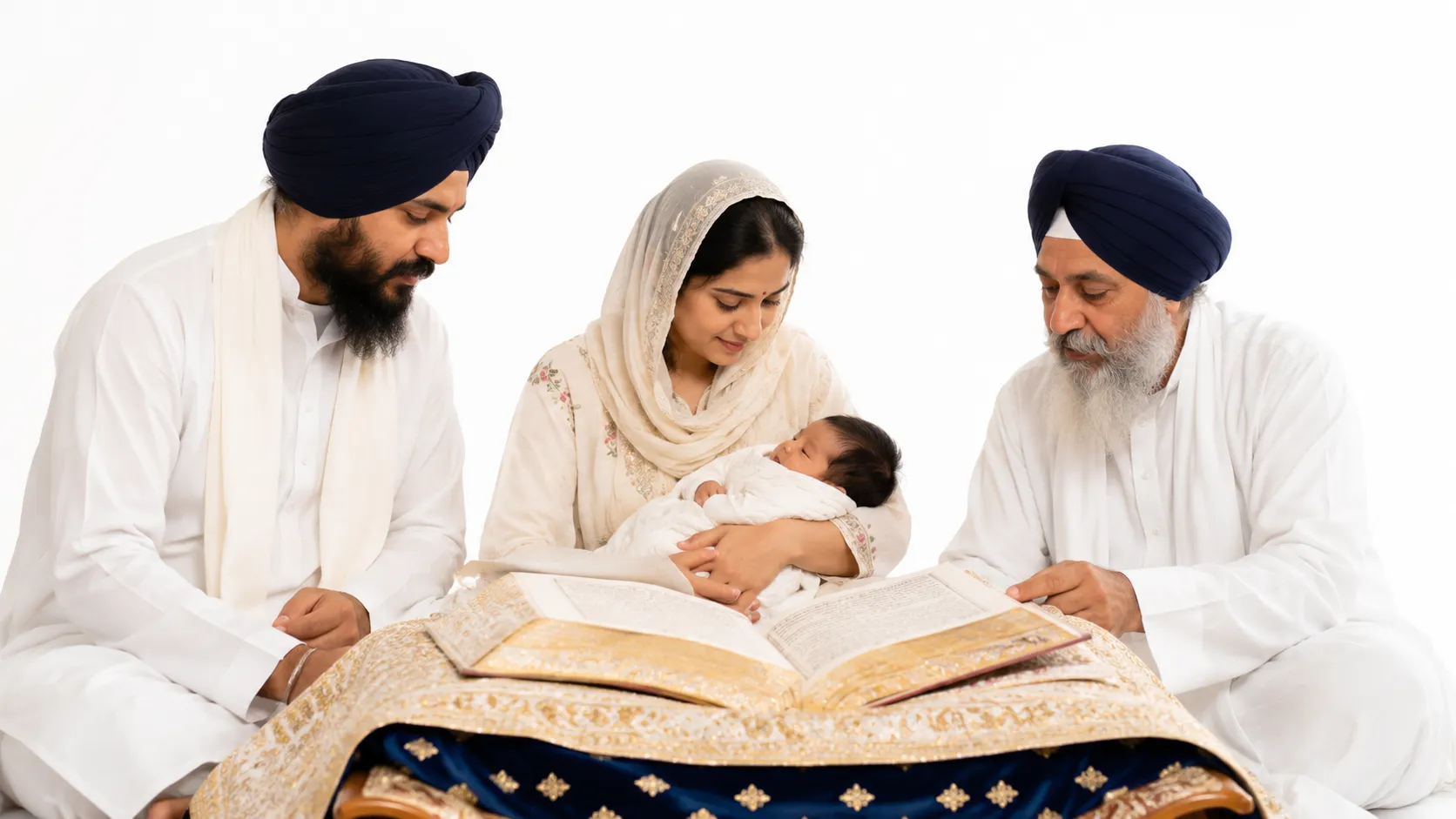
Quick Answer
In many Sikh families, baby names begin with a letter determined by opening the Guru Granth Sahib at a random page during the Naam Karan ceremony. The first letter of the first word on that page becomes the starting letter of the child's name.
For many Sikh families, choosing a baby's name is a spiritual act rather than simply a practical one. The name is seen as a gift of faith, and the process of choosing it is often done in the presence of the Sangat, the congregation, at the Gurdwara.
The Naam Karan ceremony is the traditional occasion for naming a Sikh baby. It typically takes place as soon as the mother and baby are able to attend the Gurdwara, often within a few weeks of birth.
The name is given publicly, in the presence of the Guru Granth Sahib, and the process involves opening the scripture and taking a letter as a divine guide. This is considered an act of submission to the Guru's wisdom rather than purely a personal preference.
Naam Karan means the ceremony of naming. It takes place at the Gurdwara in front of the Guru Granth Sahib.
The Granth or a member of the Granthi will open the Guru Granth Sahib to a random page. The first letter of the first word of the Shabad, the hymn, on that page is noted. This letter becomes the starting letter for the baby's name.
The parents then choose a name beginning with that letter. The name is announced to the Sangat, the congregation offers blessings, and Karah Prashad is distributed.
This ceremony connects the naming of the child to the living guidance of the Guru Granth Sahib, which is central to Sikh faith.
Understanding how the first letter tradition works in practice.
The random opening of the Guru Granth Sahib produces what is called a Hukamnama, a divine command or lesson for that moment. The first letter of the Shabad on that page is the starting point for the name.
Once the letter is known, parents look for a name beginning with it. They may consult the Guru Granth Sahib itself, as many names are drawn directly from Gurbani, the sacred scripture.
Many Sikh names come directly from words in Gurbani that carry beautiful spiritual meanings. Words meaning light, grace, love, truth, or God's presence are all found within the scripture and become names.
Some families living far from a Gurdwara may perform a simpler version at home, opening the Guru Granth Sahib themselves. Practices vary by family and community, and there is no single strictly correct way.
Sikh names are often drawn from Punjabi or Sanskrit words that appear in Gurbani and carry spiritual significance.
Names meaning light, truth, love, grace, strength, devotion, or the presence of God are very common. The name is understood as a reflection of Waheguru's qualities, a reminder to the child of what they aspire toward.
Many Sikh names are unisex in their base form, with Singh or Kaur added afterward to give a masculine or feminine identity. This reflects the Sikh principle of equality between men and women.
Singh and Kaur are not surnames in the traditional sense, though they are used that way by many families today.
Singh, meaning lion, was given to all initiated Sikh men by Guru Gobind Singh Ji. Kaur, meaning princess or lioness, was given to all initiated Sikh women. These titles were meant to dissolve caste distinctions by removing caste-based surnames.
Today, many Sikh families use Singh and Kaur as middle names or surnames. Some families retain their ancestral surname alongside Singh or Kaur. Others use only Singh or Kaur as their family name.
Practices vary widely and are a personal and family choice.
While the Naam Karan tradition remains meaningful for many families, practices do vary in the modern Sikh diaspora.
Some families still attend the Gurdwara for a full Naam Karan ceremony. Others take the first letter from the Hukamnama at home and choose the name there. Some families choose a name independently that carries spiritual meaning and announce it at the Gurdwara without strictly following the letter tradition.
Modern Sikh parents sometimes also look for names that work well in the countries they live in, that are easy to pronounce in English or other languages, while still carrying a Punjabi or Gurbani-rooted meaning.
The common thread in most Sikh families is the desire for a name that connects the child to their faith and carries a meaning of substance.
Naam Karan is the Sikh naming ceremony. It takes place at the Gurdwara in front of the Guru Granth Sahib. The Granth is opened to a random page and the first letter of the first word of the Shabad on that page becomes the starting letter of the baby's name.
Keep reading practical naming advice for nearby decisions.

NAMING GUIDE
This guide explains how many Muslim families approach baby naming, including the importance of good meanings, names from the Quran, prophet names, Arabic and cultural names, and what parents commonly consider or avoid.
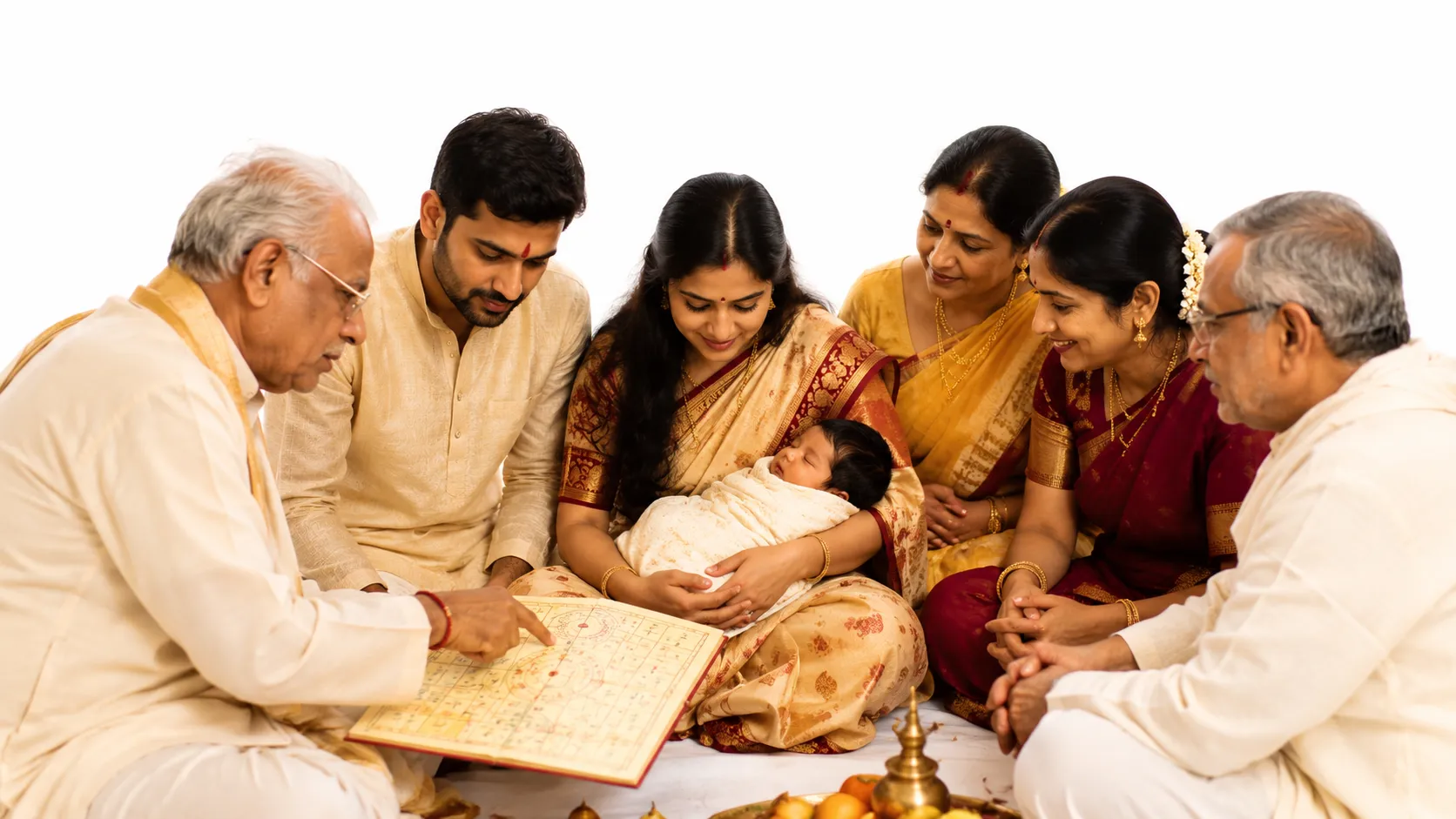
NAMING GUIDE
This guide explains how many Hindu families approach baby naming, from Sanskrit meanings and deity names to astrology, the Namkaran ceremony, and modern preferences.

NAMING GUIDE
From meaning and sound to family tradition and gut feeling, this guide walks through how parents choose baby names and what really helps when you are stuck.

NAMING GUIDE
From Google searches and baby name websites to TikTok, religious texts, and family, this guide covers where parents actually look when searching for baby names and how to build a shortlist that feels right.
Explore names by the meanings connected to this guide.

Names that mean Faith
Names connected with belief, devotion, trust and spiritual conviction.

Names that mean Guidance
Names that mean Guidance

Names that mean Strength
Names connected with power, firmness, resilience and inner steadiness.

Names that mean Light
Names connected with guidance, illumination, clarity and brightness.

Names that mean Wisdom
Names connected with knowledge, understanding, insight and intelligence.