Family trees
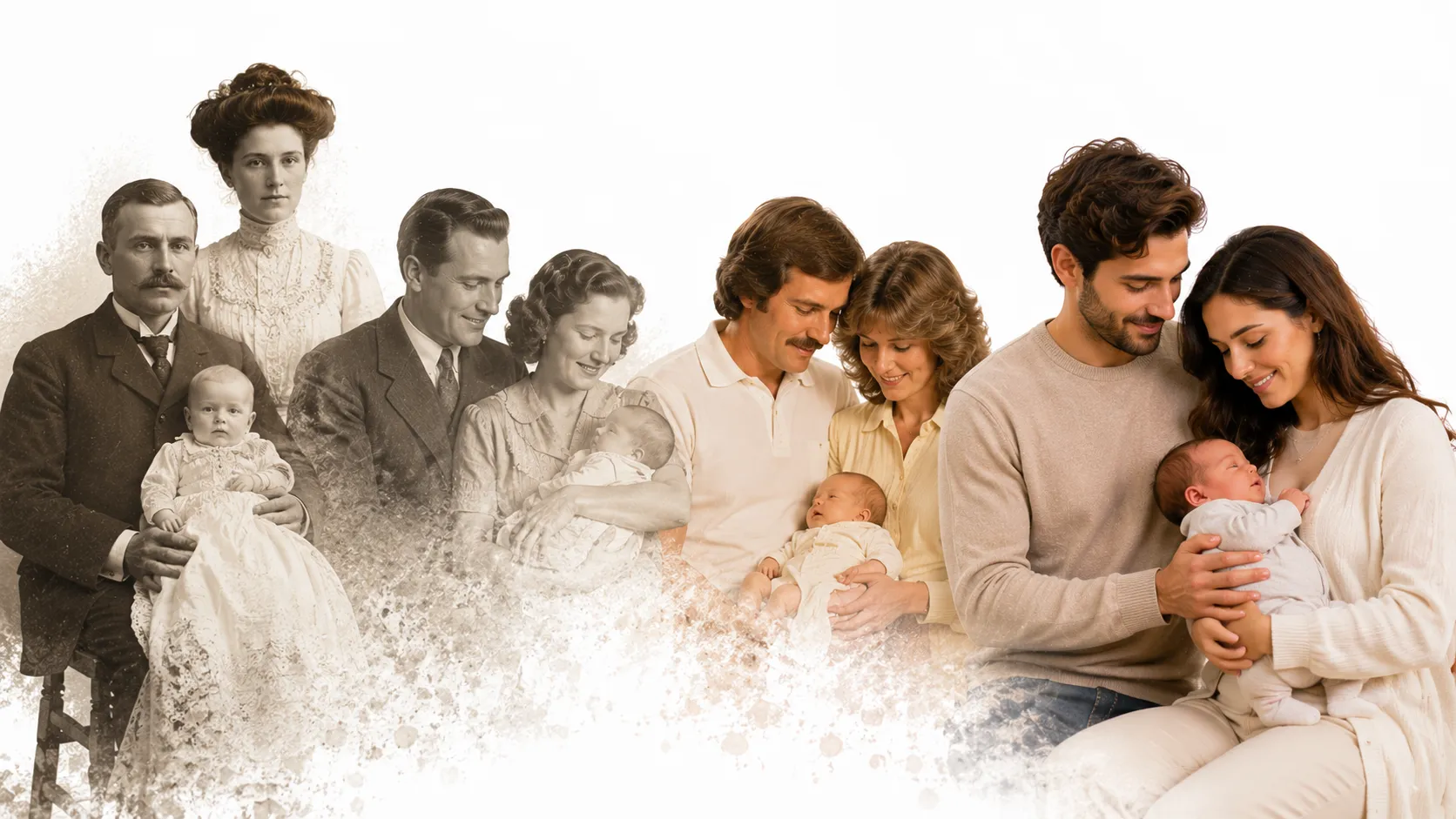
Going back a few generations often turns up beautiful names that have been forgotten. A great-grandmother's name or an old family surname can become a fresh and meaningful first name.
NAMING GUIDE
Name ideas come from everywhere. A grandmother, a film, a word in another language, a feeling. Here is where parents actually find their inspiration.
This guide looks at where baby name ideas really come from, how one idea can lead to a shortlist, and how to find names that feel genuinely yours rather than borrowed from a trend.

Quick Answer
Most baby name ideas come from family history, religion, culture, nature, books, films, or simply hearing a name and liking the sound of it. A lot of parents start with a vague feeling about what kind of name they want, and then go looking for it.
Parents pull inspiration from many directions. Often the best name comes from an unexpected place.
Going back a few generations often turns up beautiful names that have been forgotten. A great-grandmother's name or an old family surname can become a fresh and meaningful first name.
Many families turn to the Quran, Bible, Guru Granth Sahib, Hindu scriptures, or other sacred texts. Names from these sources carry meaning, history, and faith in a single word.
A name from your mother tongue or ancestral culture can feel like a way to stay connected across generations. Even if you live far from where your family is from, the name keeps that thread alive.
Characters from literature and cinema have inspired baby names for decades. Parents often find themselves drawn to a name because of how a character made them feel, not just how the name sounds.
Names inspired by flowers, rivers, mountains, stars, seasons, and natural phenomena are popular across many cultures. Nature gives names a sense of peace and permanence.
Some parents search for a word they love in Arabic, Sanskrit, Korean, Welsh, or another language, and discover it works beautifully as a name. Meaning-first searching opens up a much wider world.
A single name you like can lead you to five more. Here is how parents move from scattered ideas to a real shortlist.
Write down every name that catches your attention, even if you are not sure yet. Notes app, notebook, voice memo. Just capture it.
After a week or two, look at your list. Do the names share a sound, a meaning, an origin? That pattern tells you something about what you are really looking for.
If you keep writing down soft, two-syllable names, search specifically for those. If all your favorites mean light or life, search by meaning.
Say each name on the shortlist out loud with your partner or someone you trust. Reactions are often instant and honest.
A name should spark something. If you feel nothing when you say it, it probably is not the one. Keep only the names that give you some kind of feeling.
There is a moment a lot of parents describe where a name just clicks. It is hard to explain logically. The name sounds right, it feels connected to who you are, and you can picture saying it every day.
This usually happens when a name combines a few things at once. It sounds good to your ear, it carries a meaning you care about, and it does not come with a complicated memory or association. When all those things line up, the decision becomes easier.
Sometimes it happens because you hear a name at the right moment. You are open to it, relaxed, not overthinking. That is why taking breaks from the search can actually help. Stepping away and coming back with fresh eyes gives names a chance to land differently.
If the usual searches are not working for you, here are some approaches that other parents have found genuinely useful.
Search by meaning, not by name
Instead of scrolling through endless lists, type in a meaning you love. 'Names that mean river' or 'names that mean dawn'. You will find names you would never have found otherwise.
Look at old family documents
Birth certificates, marriage records, and old letters often contain names from two or three generations back. These names have your family's history built into them.
Explore names from your cultural roots
If you have heritage from a specific region or culture, look at names from that tradition. Even if the name is less familiar to those around you, it can carry enormous personal meaning.
Read a book in your genre
If you love historical fiction, fantasy, or literary novels, pay attention to character names as you read. Writers often spend a lot of time choosing names that carry emotional weight.
Start with a feeling rather than a name. Ask yourself what quality you want the name to carry. Strong, gentle, spiritual, classic, nature-inspired. Then search from that starting point. It is often easier than browsing endless lists with no direction.
Keep reading practical naming advice for nearby decisions.

NAMING GUIDE
From meaning and sound to family tradition and gut feeling, this guide walks through how parents choose baby names and what really helps when you are stuck.

NAMING GUIDE
From Google searches and baby name websites to TikTok, religious texts, and family, this guide covers where parents actually look when searching for baby names and how to build a shortlist that feels right.

NAMING GUIDE
Decision fatigue, perfectionism, partner disagreements, and fear of regret can all make baby naming feel impossible. This guide explains what is really happening and how to get unstuck.
NAMING GUIDE
This guide explains why baby names go in and out of fashion, how overuse, celebrity influence, generational associations, and cultural shifts all play a role, and why old names tend to return.
Explore names by the meanings connected to this guide.

Names that mean Nature
Names that mean Nature
Names that mean Flower
Names inspired by bloom, softness, freshness and natural beauty.
Names that mean Star
Names with celestial sparkle, guidance, night beauty and quiet brilliance.

Names that mean Moon
Names inspired by moonlight, night beauty, calm radiance and gentle mystery.

Names that mean Light
Names connected with guidance, illumination, clarity and brightness.