Grandparent names
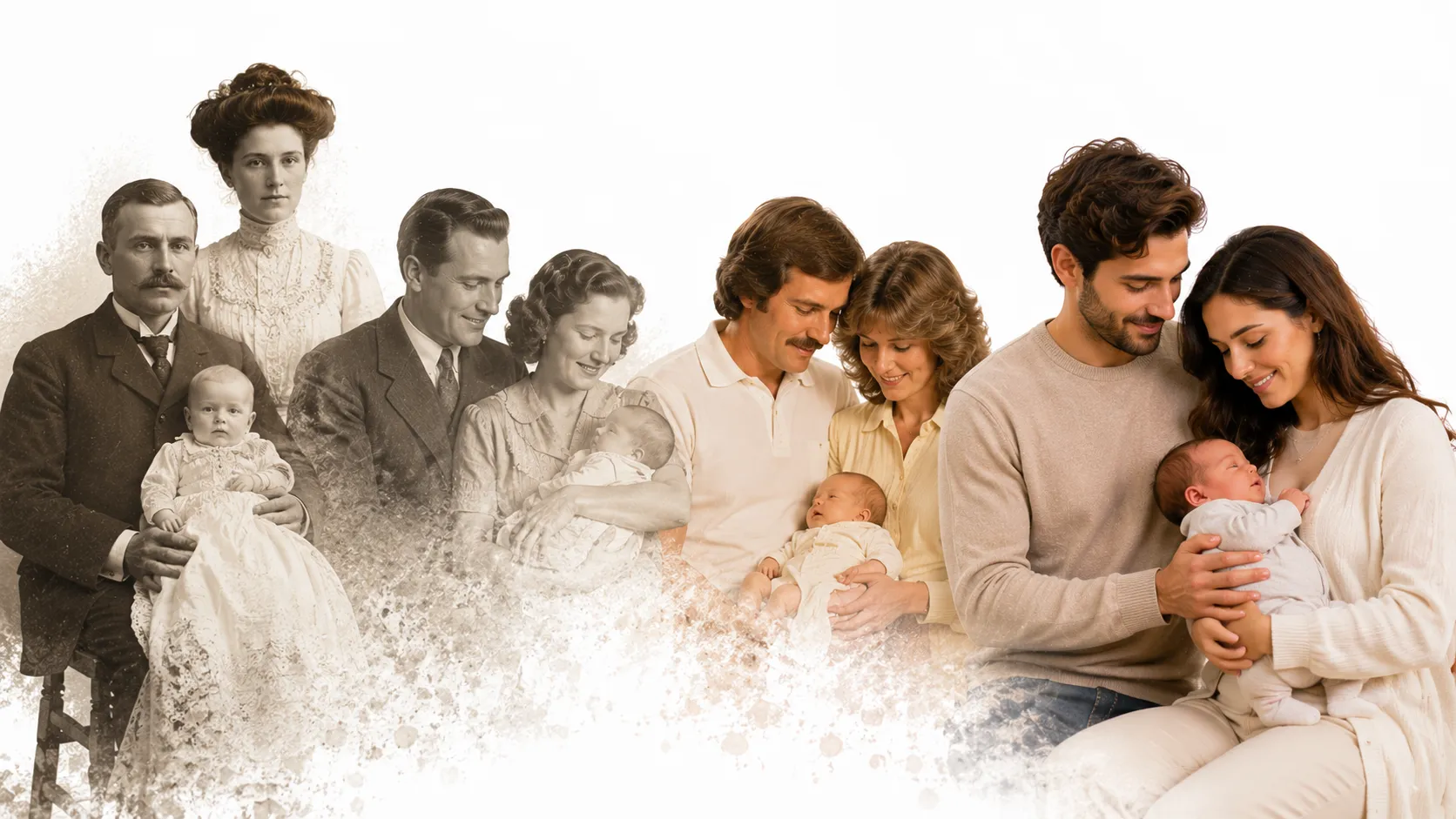
Names that were common for people now in their 70s and 80s can feel stuffy or old-fashioned to current parents. For a period, these names feel like they belong to another era. Then, a generation later, they become charming again.
NAMING GUIDE
Names that were everywhere twenty years ago can feel dated today. And names that felt old-fashioned are suddenly coming back. Here is why naming trends work the way they do.
This guide explains why baby names go in and out of fashion, how overuse, celebrity influence, generational associations, and cultural shifts all play a role, and why old names tend to return.
Quick Answer
Names fall out of fashion mainly because they become associated with a particular generation, get used too heavily for a period, or carry memories of people or characters from the past. Most names come back eventually, usually after a gap of two to three generations.
Names are cultural signals. When a name is very popular for a short period, it becomes strongly associated with that time. People who grew up knowing many children with that name start to feel it sounds dated rather than fresh.
This is part of a natural cycle. Names rise in popularity, reach a peak, and then go quiet for a generation or two before parents start rediscovering them again.
The pattern is fairly predictable. A name that was common in the 1970s or 1980s often sounds very of its time to parents today, who were children themselves during that period. Give it another twenty to thirty years and it starts to sound interesting again.
When a name reaches a certain level of popularity, it can start to feel generic rather than personal. Parents who want their child's name to feel individual begin to avoid it.
This feedback loop accelerates the decline. As more parents consciously avoid the name because it is too popular, its usage drops sharply. Within a decade, a name that was on every classroom register can disappear almost entirely.
This is not a permanent state. Scarcity eventually makes the name feel fresh again, which is part of why it returns a generation later.
One of the most common reasons names feel dated is that they are strongly associated with older generations.
Names that were common for people now in their 70s and 80s can feel stuffy or old-fashioned to current parents. For a period, these names feel like they belong to another era. Then, a generation later, they become charming again.
Sometimes a name becomes strongly associated with a specific person in the public eye, a politician, a criminal, or a controversial figure. This can make a name feel tainted for years or even decades.
A name that was heavily used for a specific character type in a particular era of television can start to feel like it belongs to that era. These associations fade as the shows themselves fade from everyday conversation.
Parents sometimes avoid names that remind them strongly of a difficult colleague, an old teacher, or someone from their past. These personal associations are private but very real.
Celebrities and popular culture have a significant effect on naming trends.
When a well-liked celebrity names their child something unusual or unexpected, that name often sees a spike in popularity within the following year or two. Parents who admire the celebrity or the choice adopt the name themselves.
Films, television, and books have a similar effect. A beloved character with an unusual name can introduce that name to parents who had never considered it before. The name then rises, peaks, and eventually starts to feel like it belongs to that era of popular culture.
This cycle repeats constantly. The names that feel most fresh today are often the ones that have not yet had their celebrity or media moment.
Almost every name returns eventually. The cycle is driven by generational distance.
A name that was common for people born in the 1940s may feel dated to parents born in the 1970s, who associate it with their grandparents' generation. But to parents born in the 1990s or 2000s, that same name has no living personal association. It feels vintage, unusual, and interesting.
The gap between a name going out of fashion and coming back is roughly two to three generations, around sixty to eighty years in many cases.
This is why names like Iris, Mabel, Arthur, and Florence have seen revivals in recent years. They cleared the generational memory of the people who knew them as common names, and now they feel fresh to a new generation of parents.
That is a personal choice. Every name dates its generation to some degree. A name with strong personal or cultural meaning will always feel right regardless of whether it was popular at the time. If you love a popular name, it is worth choosing it for the right reasons.
Keep reading practical naming advice for nearby decisions.

NAMING GUIDE
From meaning and sound to family tradition and gut feeling, this guide walks through how parents choose baby names and what really helps when you are stuck.

NAMING GUIDE
This guide looks at where baby name ideas really come from, how one idea can lead to a shortlist, and how to find names that feel genuinely yours rather than borrowed from a trend.

NAMING GUIDE
Decision fatigue, perfectionism, partner disagreements, and fear of regret can all make baby naming feel impossible. This guide explains what is really happening and how to get unstuck.

NAMING GUIDE
From Google searches and baby name websites to TikTok, religious texts, and family, this guide covers where parents actually look when searching for baby names and how to build a shortlist that feels right.
Explore names by the meanings connected to this guide.
Names that mean Beauty
Names that mean Beauty
Names that mean Grace
Names that mean Grace
Names that mean Wisdom
Names connected with knowledge, understanding, insight and intelligence.

Names that mean Joy
Names that carry happiness, delight, gladness and a bright emotional tone.