Sound Processing
Auditory cortex processes the sound.
Psychology
In a crowded room filled with noise, you can still hear your name from across the room. Your brain is wired to respond to it.
The cocktail party effect is a well-known phenomenon. But what is actually happening in your brain when you hear your name?
Your name is the most powerful auditory cue in your life. Here is what science has discovered about how your brain responds.
Quick Answer
What happens to your brain when you hear your name? Your brain responds within milliseconds. The auditory cortex, prefrontal cortex and limbic system all activate. Your name triggers a unique pattern of brain activity that is different from hearing other words. This is known as the cocktail party effect and is one of the most powerful auditory responses in the human brain.
Quick Overview
What happens to your brain when you hear your name? Your brain responds within milliseconds. Multiple brain regions activate including the auditory cortex, prefrontal cortex and limbic system.
Your name triggers a unique pattern of brain activity that is different from hearing other words. This is known as the cocktail party effect.
Visual Guide
How your brain processes hearing your name.
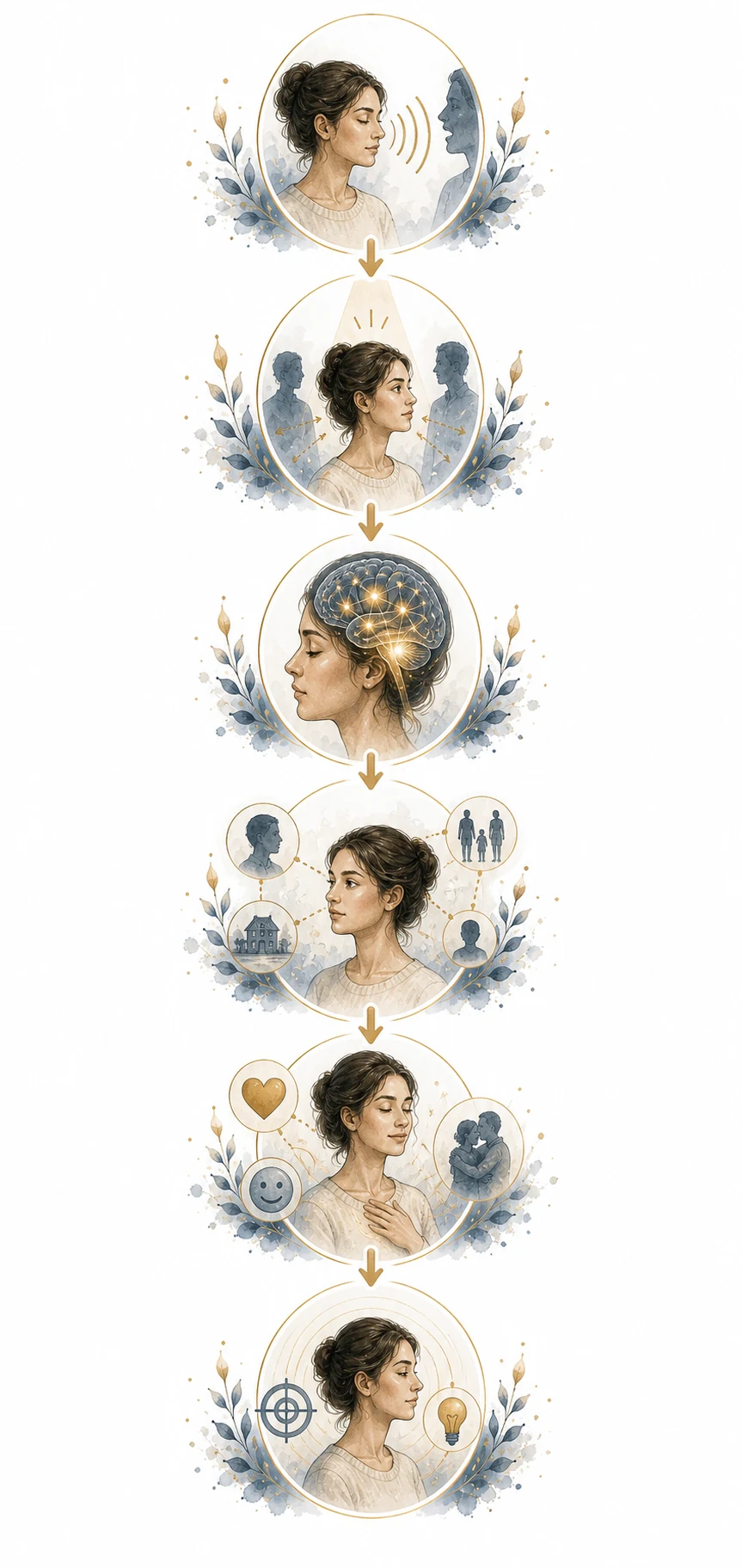
Auditory cortex processes the sound.
Your name is identified as special.
Limbic system triggers emotions.
Attention is directed to the source.
The cocktail party effect is the ability to focus on one voice in a noisy environment while filtering out other sounds.
It is named after the experience of being at a party and being able to hear a conversation despite background noise.
One of the most powerful triggers for the cocktail party effect is hearing your own name. Your name cuts through the noise like nothing else.
This is because your brain is primed to respond to your name. It is one of the most personally significant sounds you can hear.
When you hear your name, your brain responds in a specific sequence.
First, the auditory cortex processes the sound. This happens in milliseconds.
Next, the prefrontal cortex identifies the sound as your name. This is where recognition occurs.
Then, the limbic system responds emotionally. Your name triggers feelings and associations.
Finally, your attention is directed toward the source. This is why you turn toward someone who says your name.
This process happens so fast that you are often not even aware of it. The brain is optimized to respond to your name.
Hearing your name triggers a complex pattern of brain activity.
The auditory cortex processes the sound of your name. This happens in the first milliseconds.
Like a computer recognizing a file name before opening it.
The prefrontal cortex recognizes the sound as your name. This is where your name is stored as special.
Like a security system recognizing a familiar face.
The limbic system triggers emotions associated with your name. This includes memories and feelings.
Like hearing a song that reminds you of a specific time in your life.
Your attention is directed toward the source. This is the cocktail party effect in action.
Like a spotlight turning toward a speaker.
Academic Study
Academic Study
Academic Study
Academic Study
Academic Study
Your brain responds to your name the same as any other word.
Your name triggers a unique pattern of brain activity that is different from hearing other words.
Only adults respond to their names.
Infants as young as 4 months old can recognize their names.
Hearing your name has no emotional effect.
Your name triggers emotional responses through the limbic system.
Everyone responds to hearing their name equally.
Personal and cultural differences affect how strongly people respond to their names.
Important
What happens to your brain when you hear your name? Your name is the most powerful auditory cue in your life. It triggers a unique pattern of brain activity that no other word can match.
Verdict
Hearing your name triggers a unique brain response that involves multiple regions including the auditory cortex, prefrontal cortex and limbic system. This response is faster and more powerful than hearing other words.
The question of what happens to your brain when you hear your name reveals something important about human nature.
Your name is central to your identity. It is how the world knows you. It is how you know yourself.
The brain's powerful response to your name is a reminder of how social we are. We are wired to respond to being recognized and acknowledged.
This is why hearing your name feels different from hearing other words. It is not just a sound. It is a recognition of who you are.
Your brain responds within milliseconds. The auditory cortex, prefrontal cortex and limbic system all activate. Your name triggers a unique pattern of brain activity.
The cocktail party effect is the ability to focus on one voice in a noisy environment. Hearing your name is one of the most powerful triggers of this effect.
Yes. Your name triggers a unique pattern of brain activity that is different from hearing other words.
Yes. Infants as young as 4 months old can recognize their names and respond to them.
Hearing your name feels different because your name is central to your identity. It triggers emotional responses and activates multiple brain regions.
What happens to your brain when you hear your name? Your brain lights up. Your name is not just a word. It is you. It is how the world knows you. And your brain knows it.