NAMING GUIDE

How Do Koreans Choose Baby Names?

Korean names are carefully constructed. The structure, the meaning of each character, and the way the name sounds all play a role in how it is chosen.

This guide explains how many Korean families choose baby names, including the structure of Korean names, the use of hanja characters, generation names, sound preferences, and the role of professional naming consultants.

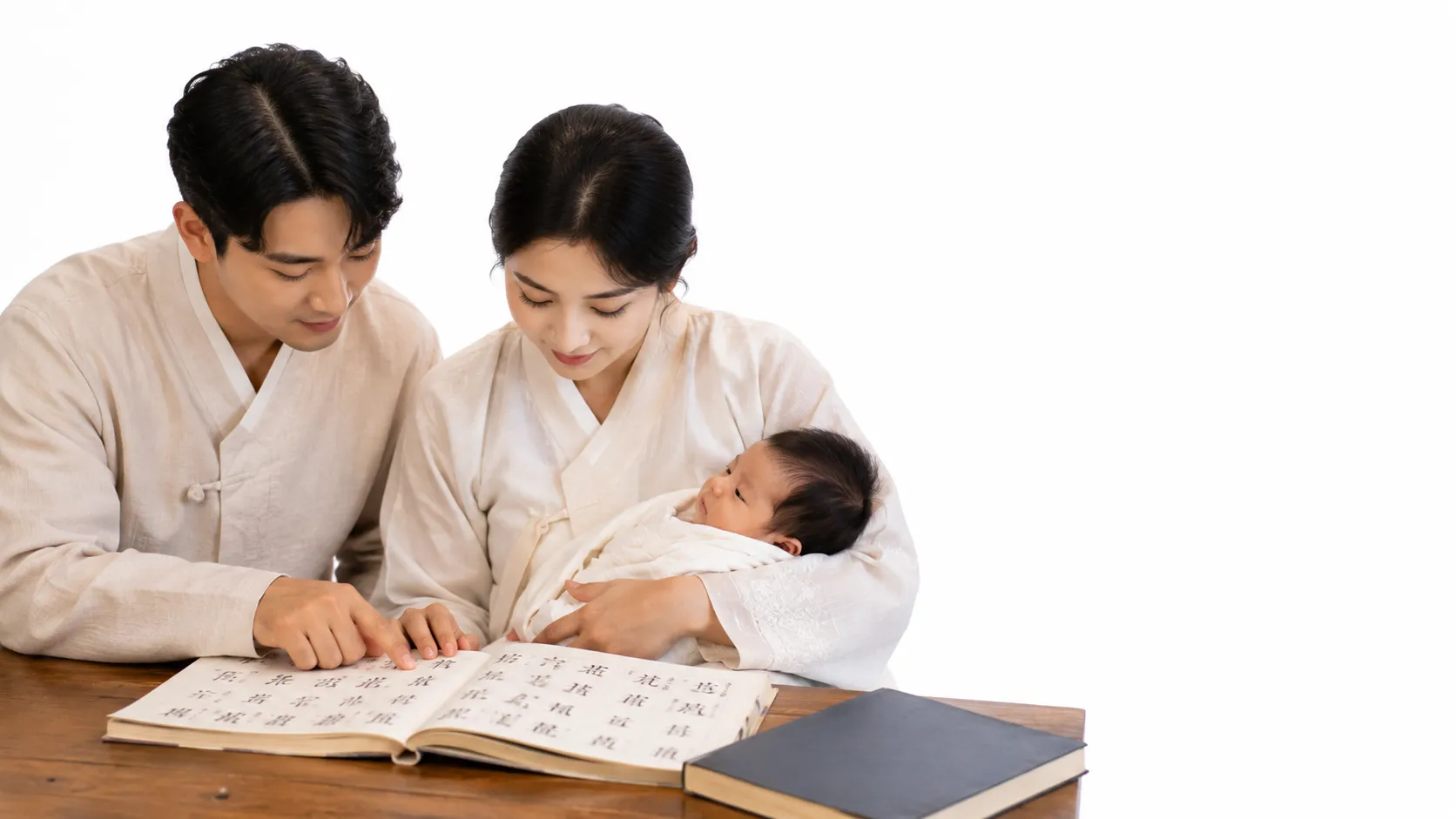
A Korean family with a baby, and a sheet of paper with Korean name characters written on it

Quick Answer

Most Korean names follow a family name first structure, with a given name of usually two syllables. Many families choose the meaning through hanja Chinese characters, may use a generation name shared with cousins, and increasingly also consider how the name sounds in everyday life.

Korean Name Structure

A Korean name is typically written with the family name first, followed by the given name. This is the standard order in Korean usage, though the order is often reversed in international contexts.

Family names in Korea are shared, and there are relatively few common family names. The given name is usually two syllables, though one-syllable given names also exist and were more common historically.

Each syllable of the given name is typically represented by a hanja character, a Chinese character used in Korean. Each character carries a specific meaning, so the given name is essentially a combination of two meaningful words or concepts.

Choosing the right hanja for each syllable is an important part of the naming process for many Korean families.

Meaning Through Hanja

Hanja characters give Korean names their depth and meaning. Here is how families use them.

Each syllable has a meaning

Because each syllable corresponds to a hanja character, parents are choosing not just a sound but two specific meanings combined. A name like Jisoo, for example, could carry meanings of wisdom and excellence depending on which hanja are chosen.

The same sound, different meanings

Two people can have names that sound identical in Korean but are written with different hanja and carry entirely different meanings. This is why knowing the hanja of a name matters to many families.

Choosing auspicious combinations

Many families choose hanja characters based on their positive associations and the feeling the combination creates. Characters connected to brightness, wisdom, strength, good fortune, and virtue are popular choices.

Saju and professional naming

Some families consult a saju specialist, someone who analyzes the baby's birth date and time through traditional Korean astrology, to determine which elements the child's name should balance. Professional baby naming consultants are also common in Korea.

Generation Names

In many Korean families, a shared generational name, often called a dollim ja, is used for all children of the same generation within an extended family.

This means that siblings and cousins born in the same generation share one syllable of their given name. The shared syllable might be the first or the second, and it is agreed upon by the extended family.

This tradition connects members of a generation to each other and to the family lineage. By hearing a name, extended family members can often tell which generation someone belongs to.

This practice is less universal among younger families and those living outside Korea, but it remains meaningful for many families who want to maintain the tradition.

Sound and Modern Style

Beyond meaning, many Korean parents today also think carefully about how the name sounds.

Some parents prefer names that are soft-sounding. Others want something strong and clear. The rhythm of the name when said with the family name matters too, just as it does in many other cultures.

Increasingly, parents also think about how the name will work internationally. Korean names that are easy for non-Korean speakers to pronounce have become more popular among families who live abroad or expect their child to operate in multilingual contexts.

Some modern parents are also moving away from hanja entirely and choosing pure Korean names, hangul-only names that use native Korean words rather than Chinese-character-derived words. These names can feel both traditional and fresh at the same time.

Family and Social Fit

Korean naming is often a family affair. Grandparents may propose names or have strong preferences, particularly around generation name choices.

In many families, the final name is agreed upon collectively rather than chosen by parents alone. A naming consultant may be brought in to suggest options that satisfy both the astrological and aesthetic preferences of the family.

The social dimension of the name also matters. Parents consider whether the name sounds good at school, in a professional setting, and in everyday conversation. Names that carry unintended awkward meanings or sounds when spoken aloud are carefully avoided.

Quick Tips

  • Choose the hanja for each syllable carefully as the meaning combination matters
  • Check whether your family has a generation name tradition before finalizing
  • Think about how the name sounds with your family name
  • Consider whether the name works in both Korean and international contexts if relevant
  • Professional naming consultants are widely used in Korea and their input is considered valuable

FAQ

In Korean naming convention, as in many East Asian cultures, the family name comes before the given name. This reflects a cultural emphasis on family identity before individual identity. The order is often reversed in international or Western contexts for ease of use.