Name Submission
Parents submit the name for registration.
Naming Rules
Naming your child King might sound powerful and regal. But in many countries, it is not allowed.
Royal titles like King, Queen, Prince and Princess are among the most commonly restricted names in the world.
Countries ban these names for different reasons. Some see them as misleading. Others see them as inappropriate. Here is what you need to know.
Quick Answer
Can I name my kid King? In most countries, no. Many countries restrict royal titles as baby names. New Zealand, Australia, Sweden and others have rejected names like King, Queen, Prince and Princess. The US generally allows it, but some states may review it.
Quick Overview
Can I name my kid King? It depends on where you live. Many countries restrict royal titles as baby names.
New Zealand, Australia, Sweden and other countries have rejected names like King, Queen, Prince and Princess. The US generally allows them, though some states may review the name.
Visual Guide
Different countries evaluate royal titles as names differently.
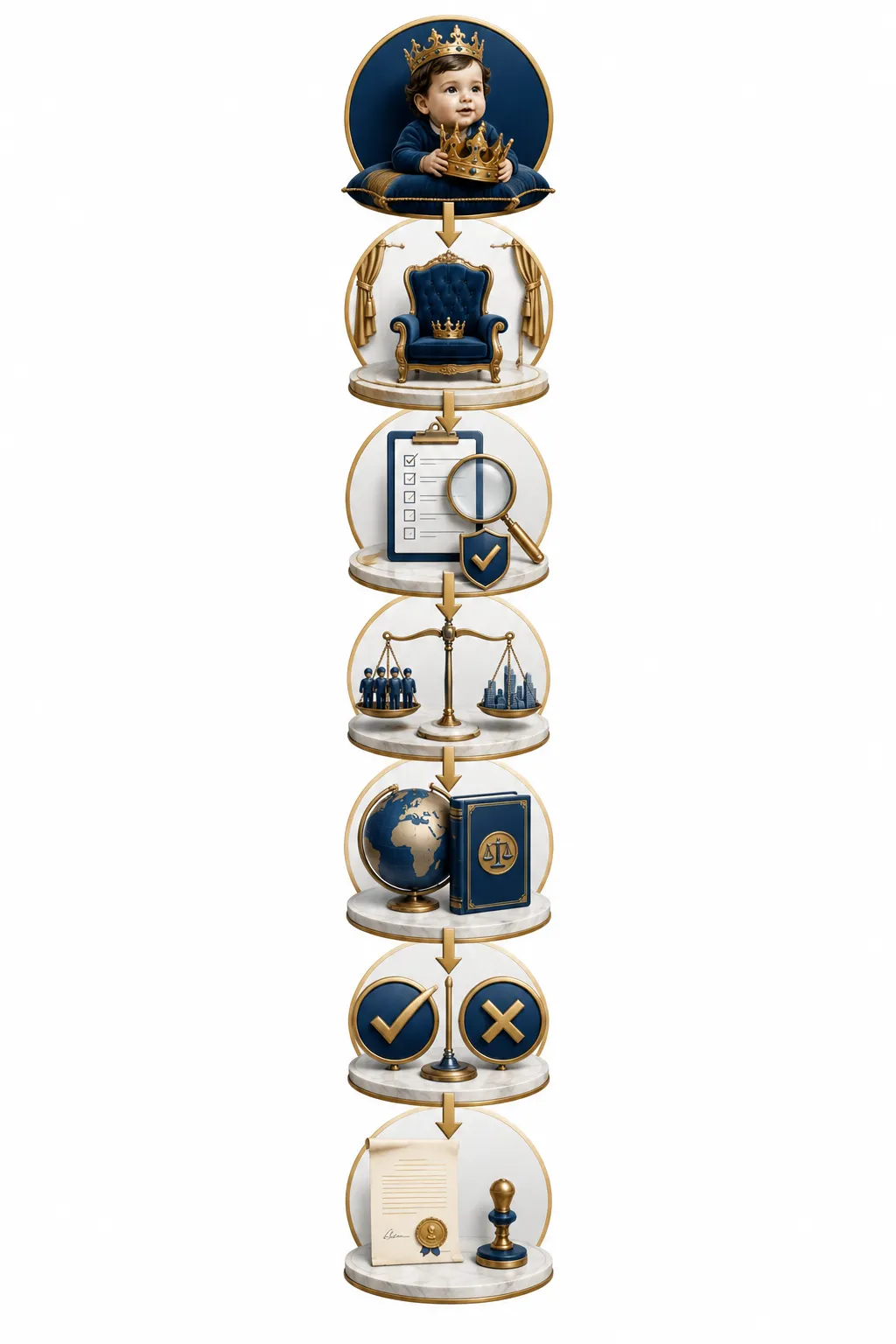
Parents submit the name for registration.
Authorities consider if the name implies a title.
Name is evaluated against title restrictions.
Final decision is made by registry officials.
Royal titles like King, Queen, Prince and Princess are among the most commonly restricted names in the world.
The main reason is that names implying a title can be misleading or cause confusion. Official records should not suggest someone has a rank or status they do not hold.
Some countries also see royal titles as inappropriate for a child. Giving a child a name like King might encourage unrealistic expectations or expose them to ridicule.
Cultural sensitivity is another factor. In countries with a royal family, using a royal title as a name can be seen as disrespectful or presumptuous.
In New Zealand, a couple tried to name their child King. The name was rejected by registry officials. New Zealand has strict rules about names that imply royal titles.
In Australia, the name King has also been rejected in some cases. The country has similar rules to New Zealand.
In Sweden, parents attempted to name their child Queen. The name was rejected. Sweden's naming authorities have a history of restricting names that are considered inappropriate.
In the United States, a family named their child King. The name was allowed because the US does not have the same restrictions on royal titles.
These cases show that can I name my kid King depends heavily on the country.
| Country | Legal Status | Typical Outcome |
|---|---|---|
| New Zealand | Restricted | King, Queen, Prince rejected |
| Australia | Restricted | May reject royal titles |
| United States | Generally allowed | Few restrictions on royal titles |
| United Kingdom | Case by case | May review royal titles |
| Sweden | Restricted | Queen rejected |
| France | Case by case | May reject titles |
| Name | Country | Outcome |
|---|---|---|
| King | New Zealand | Rejected |
| Queen | Sweden | Rejected |
| Prince | France | Rejected |
| Princess | New Zealand | Rejected |
| Duke | Various | Often reviewed |
King is banned everywhere.
No. The US generally allows it. Some countries restrict it.
All royal titles are banned in all countries.
Restrictions vary by country. Some have strict bans. Others have none.
You can never name your child King in the US.
You can. The US has very few restrictions on royal titles.
Royal titles are banned for religious reasons.
The restrictions are usually about avoiding confusion or perceived status, not religion.
Important
Can I name my kid King? In many countries, the answer is no. Always check your local laws before choosing a royal title for your child.
The question of whether a parent can name their child King reveals something important about how societies view status and identity.
Parents see a name as self-expression. It is a gift they give their child. It carries hopes, dreams and meaning. Some parents want a name that sounds powerful or prestigious.
Governments see a name as part of a legal record. It should be neutral. It should not imply a rank or status that the person does not hold.
The tension between those two ideas is why naming laws exist in the first place.
Royal titles are particularly sensitive because they are connected to systems of power and privilege. In countries with monarchies, using a royal title as a name can be seen as disrespectful.
What does that tell us? That naming laws are designed to maintain order and prevent confusion.
The question of whether a parent can name their child King reveals a deeper tension between personal aspiration and social order.
Yes. The US generally allows royal titles like King. Some states may review the name but few restrictions exist.
It depends. UK registrars may review names that could cause confusion or offense. Royal titles are sometimes restricted.
New Zealand restricts names that imply a title or rank. King, Queen, Prince and Princess are all rejected.
Queen, Prince, Princess, Duke and similar titles are often restricted in countries with strict naming laws.
France has rejected the name Prince in some cases. French courts have ruled that names implying titles are not allowed.
Can I name my kid King? The answer depends on where you live. But the deeper question is whether a child should carry a title as a name. In countries with strict naming laws, the answer is no. The line between a name and a title matters.