Name Submission
Parents submit the name for registration.
Naming Rules
Canada is known for its welcoming culture. But when it comes to baby names, there are still rules that parents must follow.
While there is no national list of banned names, Canadian provinces can reject names that are offensive or would cause harm.
The rules vary by province. Some are stricter than others. Here is what you need to know.
Quick Answer
What baby names are banned in Canada? There is no national list. However, provinces can reject names that are offensive, promote hatred, or would cause harm to the child. Examples include names like Lucifer and Adolf, which have faced rejection in some cases.
Quick Overview
What baby names are banned in Canada? There is no national list of banned names. Each province has its own rules and procedures.
Names can be rejected if they are offensive, promote hatred, or would cause harm to the child. The rules are similar to those in the UK and other Commonwealth countries.
Visual Guide
Canada uses a provincial system for evaluating baby names.
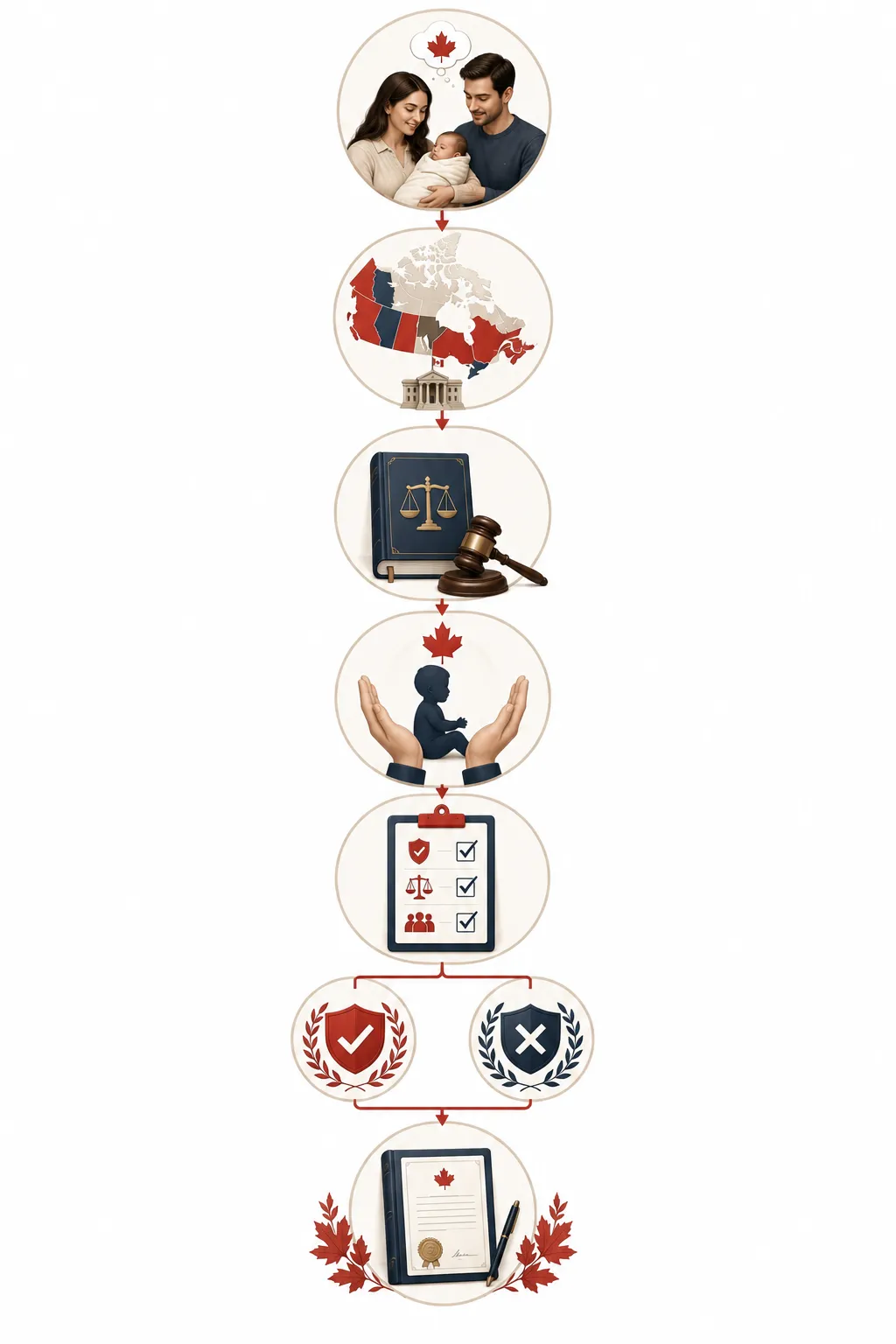
Parents submit the name for registration.
Provincial registrar evaluates the name.
Name is checked for offensiveness or harm.
Decision is made. Appeals are possible.
Canada does not have a federal law governing baby names. Instead, each province has its own rules and procedures.
Provincial registrars review birth registrations and can reject names that are offensive, promote hatred, or would cause harm to the child.
The rules are similar to those in the UK. Canada is a Commonwealth country and shares many legal traditions.
Parents who have a name rejected can appeal the decision through provincial channels.
Several famous cases have tested the limits of Canadian naming laws.
In one case, parents wanted to name their child Lucifer. The name was rejected because of its religious association with Satan and the potential for harm to the child.
In another case, parents tried to name their child Adolf. The name was rejected because of its association with Adolf Hitler.
An extreme case involved a family who tried to use an offensive racial slur as a name. The name was rejected immediately.
These cases show that what baby names are banned in Canada depends on provincial authorities and the specific circumstances.
| Province | Typical Approach | Notes |
|---|---|---|
| Ontario | Case by case | Similar to UK system |
| British Columbia | Case by case | May reject offensive names |
| Quebec | More conservative | May reject more names |
| Alberta | Case by case | Similar to Ontario |
| Nova Scotia | Case by case | Follows federal guidelines |
| Name | Reason For Rejection | Province |
|---|---|---|
| Lucifer | Religious association with Satan | Multiple provinces |
| Adolf | Historical association with Hitler | Multiple provinces |
| Jesus | Religious sensitivity | Occasional cases |
| Yahweh | Religious sensitivity | Occasional cases |
| Racial Slurs | Offensive and harmful | Multiple provinces |
Canada has a national list of banned names.
There is no national list. Each province has its own rules.
Any name can be used in Canada.
Names can be rejected if they are offensive, promote hatred, or would cause harm.
All provinces have the same rules.
Rules vary by province. Quebec tends to be more conservative than others.
Religious names are always banned in Canada.
Most religious names are allowed. Some have been rejected in specific cases.
Important
What baby names are banned in Canada depends on the province. Quebec is known for stricter rules, while Ontario tends to be more flexible.
Canada's system of provincial naming laws reflects its federal structure. Each province has authority over vital statistics, including birth registrations.
Parents see a name as self-expression. It is a gift they give their child. It carries hopes, dreams and meaning.
Governments see a name as part of a legal record. But more importantly, they see it as something that will affect the child for their entire life.
The tension between those two ideas is why naming laws exist in the first place.
Canada's provincial system allows regions to respond to local values and concerns. Quebec's stricter rules reflect its cultural distinctiveness within Canada.
What does that tell us? That naming laws are designed to protect children while respecting regional differences.
The question of what baby names are banned in Canada reveals a system that balances national values with provincial authority.
There is no national list. Provinces can reject names that are offensive, promote hatred, or would cause harm to the child.
The name has been rejected in some provinces because of its religious association with Satan. Other provinces may approve it.
The name has been rejected because of its association with Adolf Hitler. It would likely face scrutiny in most provinces.
Yes. Parents who have a name rejected can appeal the decision through provincial channels.
Yes. Quebec tends to have stricter naming rules than other Canadian provinces.
What baby names are banned in Canada? The answer depends on where you live. Canada's provincial system means that naming rules vary across the country. What is allowed in Ontario may be rejected in Quebec. For parents, this means checking local rules is essential.