No Federal Law
The US has no national naming law.
Naming Rules
The United States is known for having broad naming freedom. But that does not mean there are no rules at all.
While there is no national list of banned baby names, individual states have restrictions. The rules vary, and some names have been rejected.
The US gives parents more freedom than most countries. But there are still limits. Here is what you need to know about what baby names are illegal in the US.
Quick Answer
What baby names are illegal in the US? There is no national list of banned names. However, some states restrict names that contain numbers, symbols, obscenities, or would cause confusion. Names like Messiah have been rejected in some states. Generally, the US allows almost any name unless it interferes with official records or clearly harms the child.
Quick Overview
What baby names are illegal in the US? There is no single national list. The US does not have federal naming laws like some European countries.
However, individual states have their own rules. Common restrictions include bans on numbers, symbols, obscenities and names that would cause confusion in official records.
Visual Guide
The US has a decentralized approach to naming laws.
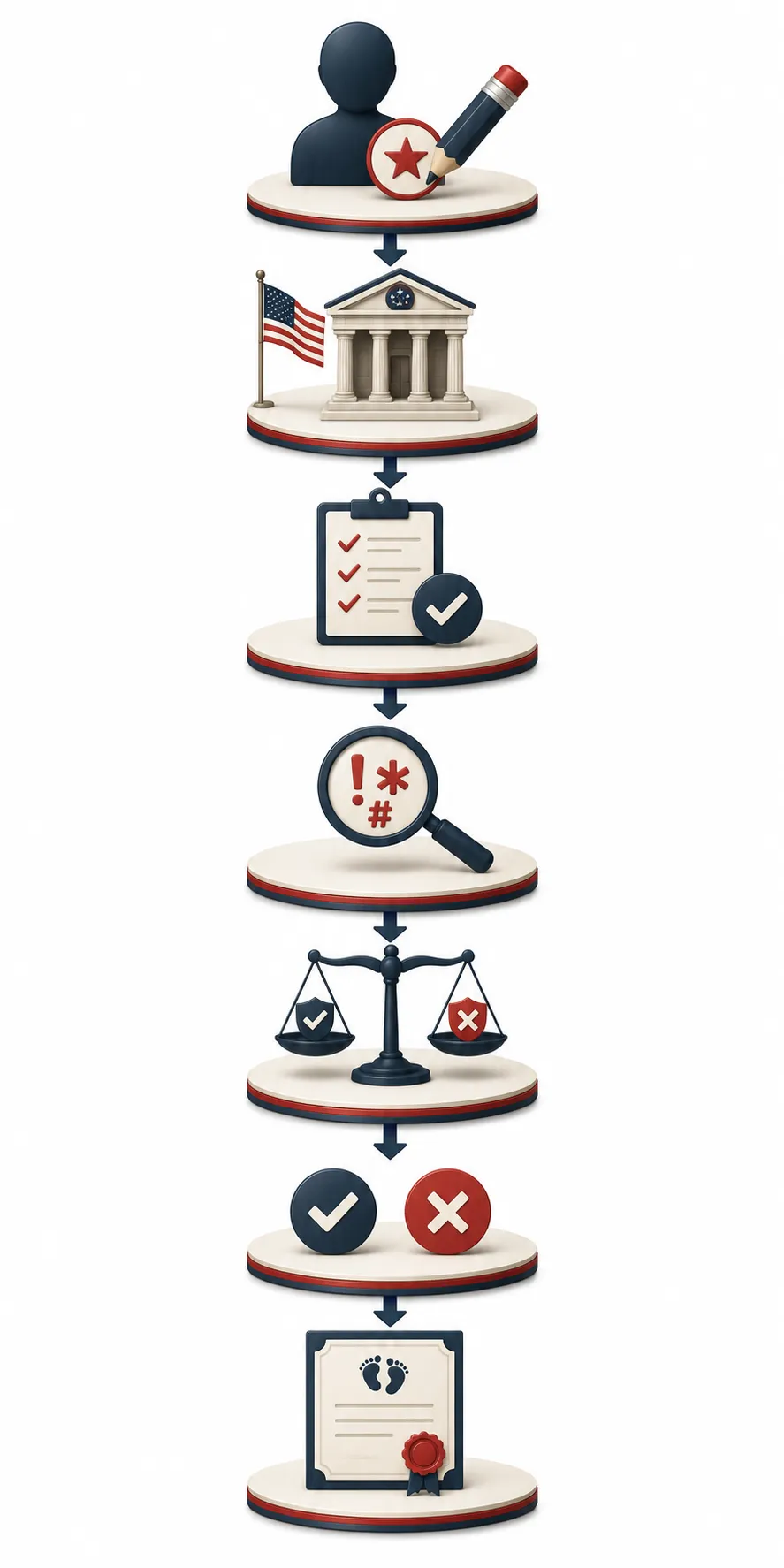
The US has no national naming law.
Each state has its own rules.
Numbers, symbols and obscenities are often banned.
Most names are allowed.
The United States does not have a federal law governing baby names. There is no national list of allowed or banned names.
Instead, each state has its own rules. State registrars review birth certificates and may reject names that do not meet local requirements.
Most states have broad freedom. Parents can generally choose almost any name. But there are exceptions.
Common restrictions include bans on numbers, symbols, obscenities and names that would cause confusion in official records.
Several famous cases have tested the limits of US naming laws.
In Tennessee, a family named their child Messiah. The name was initially rejected by a court. The judge argued that the title belonged to a religious figure and should not be used casually. The decision was later overturned.
In Kentucky, a family wanted to name their child Adolf Hitler. The name was allowed because the state had no specific restriction against it.
In New Jersey, a child was named with a number, like 2 or 3. The state rejected it because numbers are not compatible with official records.
These cases show that what baby names are illegal in the US depends on the state and the specific circumstances.
| Type | Example | Why Restricted |
|---|---|---|
| Numbers | 2, 67 | Not compatible with records |
| Symbols | @, # | Not compatible with records |
| Obscenities | Curse words | Offensive and harmful |
| Religious Titles | Messiah | Religious sensitivity |
| Excessive Length | Very long names | Record issues |
| State | Common Restrictions | Notes |
|---|---|---|
| California | No numbers or symbols | Very broad freedom otherwise |
| Texas | No numbers or symbols | Most names allowed |
| Kentucky | Very broad freedom | Adolf Hitler was allowed |
| Tennessee | Religious titles reviewed | Messiah was initially rejected |
| New York | No numbers or symbols | Obscenities prohibited |
The US has a national list of banned names.
There is no federal list. Each state has its own rules.
You can name your child anything in the US.
Most names are allowed, but numbers, symbols and obscenities are often prohibited.
Religious names are always banned in the US.
Most religious names are allowed. Some have been reviewed on a case-by-case basis.
All states have the same naming rules.
Naming rules vary significantly by state.
Important
What baby names are illegal in the US depends on where you live. Always check your state's specific requirements before finalizing a birth certificate.
The US has more naming freedom than most countries because of its legal and cultural traditions.
Americans tend to value individual liberty over government regulation. This extends to naming. Parents are generally trusted to make good decisions for their children.
But there are still limits. The government has an interest in maintaining official records. Names that interfere with that process can be rejected.
The tension between personal freedom and public identity is the same in the US as it is elsewhere. The difference is where the line is drawn.
What baby names are illegal in the US reveals a lot about American values. The focus is on practical concerns like record-keeping rather than cultural or religious sensitivity.
Every country draws the line differently. The US draws it more toward personal freedom than most. But the line still exists.
There is no national list. Each state restricts names with numbers, symbols, obscenities, or those that would cause confusion in official records.
It depends on the state. Tennessee initially rejected the name but later allowed it. Other states may have different rules.
Generally no. Most states prohibit numbers because they are not compatible with official records.
In Kentucky, it was allowed. Other states may have different rules. There is no national ban.
No. Naming rules vary significantly by state. Always check your state's specific requirements.
What baby names are illegal in the US? The answer is more about practicality than culture. The US gives parents broad freedom, but numbers, symbols and obscenities are usually off the table. The real question is not just what is legal, but what is wise.